
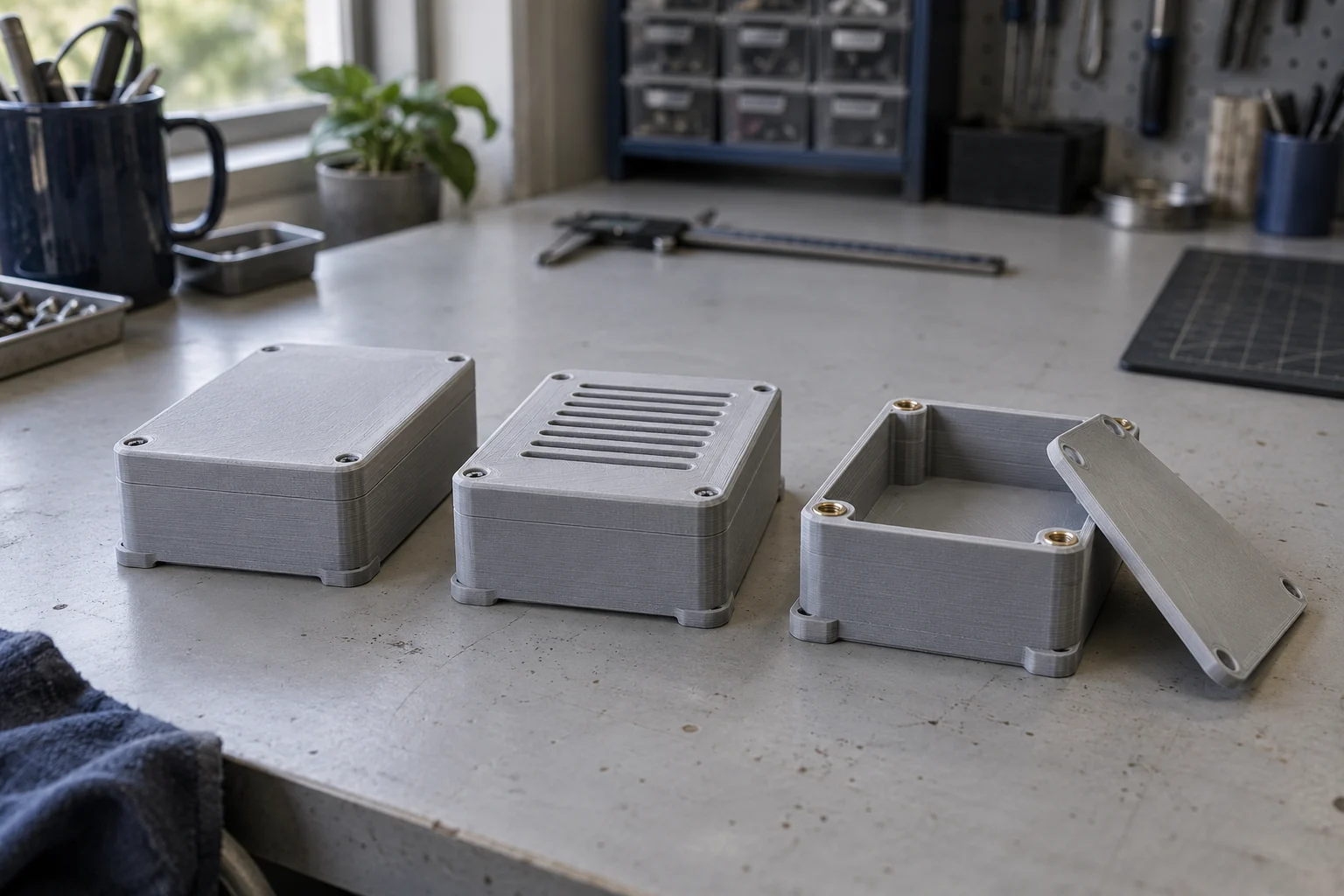
Rapid Prototyping
Move from a concept or CAD model to a physical part for fit checks, design review, assembly planning, and early functional evaluation.
Inventors, designers, and teams that need physical evidence before committing to a final design or repeat production.
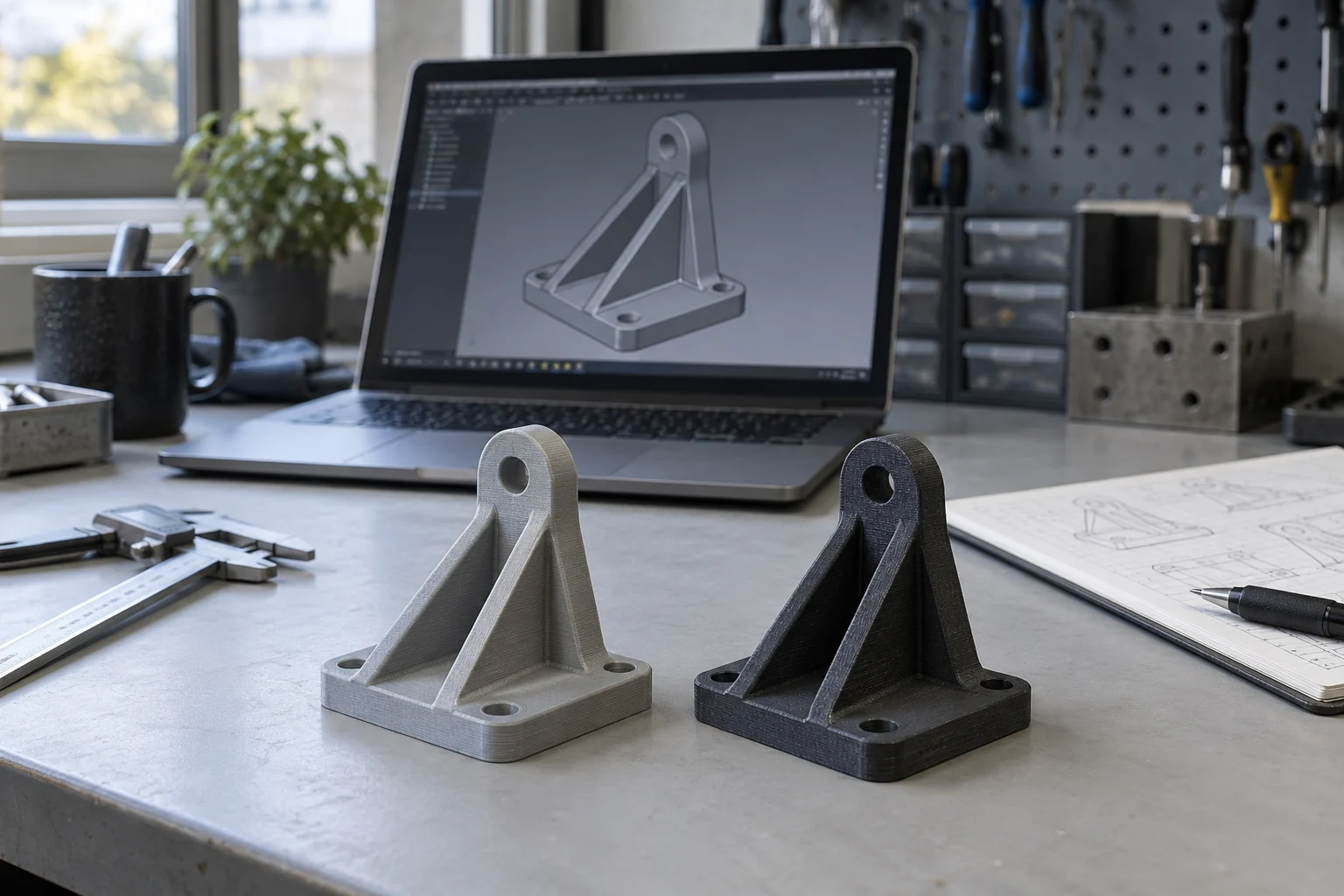
What question should this prototype answer?
A useful prototype is planned around a decision. It may need to prove fit, reveal an assembly problem, test handling, or communicate scale without pretending to be a final production part.
Fit and interfaces
A fit-check prototype focuses on mating surfaces, clearances, fasteners, access, and installation rather than every cosmetic detail.
Function and handling
A functional prototype should target the actual motion, load direction, grip, routing, or interaction being evaluated, within the limits of the selected process and material.
Appearance and communication
A form model can establish scale, proportion, placement, or presentation while leaving final finish and production behavior for later validation.
Prototyping inputs
Inventors, designers, and teams that need physical evidence before committing to a final design or repeat production.
- CAD files
- Sketches or concept notes
- Fit requirements
- Assembly context
- Target quantity
- Intended use and environment
Prototyping capabilities
Move from a concept or CAD model to a physical part for fit checks, design review, assembly planning, and early functional evaluation.
Early physical feedback
Evaluate scale, handling, interfaces, and assembly before committing to a larger run.
Design iteration
Update geometry after review and create another version when the project needs it.
Functional evaluation
Plan a prototype around the specific question the project needs to answer.
Handoff to production
Carry approved geometry and project notes into a small-batch manufacturing workflow.
Prototyping deliverables
Question-focused prototype
A physical iteration prepared around the specific fit, form, assembly, handling, or early function question defined for the project.
Iteration-ready geometry
Updated or annotated design geometry when revision work is included after physical review.
Next-step recommendation
A documented direction to revise, repeat a test, prepare approved geometry for production, or reassess the manufacturing approach.
Prototyping questions
Is a prototype the same as the final part?
Not necessarily. A prototype can isolate one decision and may use different construction, finish, or material from a later production part. We define what the prototype is intended to prove.
How many prototype versions will I need?
That depends on the design risk and what each version reveals. We do not assume a fixed number of iterations; each proposed revision should answer a useful next question.
Can I prototype an idea without CAD?
Yes. CAD design can be scoped from sketches, measurements, photos, and requirements before the physical prototype is produced.
Request a Quote
Inventors, designers, and teams that need physical evidence before committing to a final design or repeat production.