
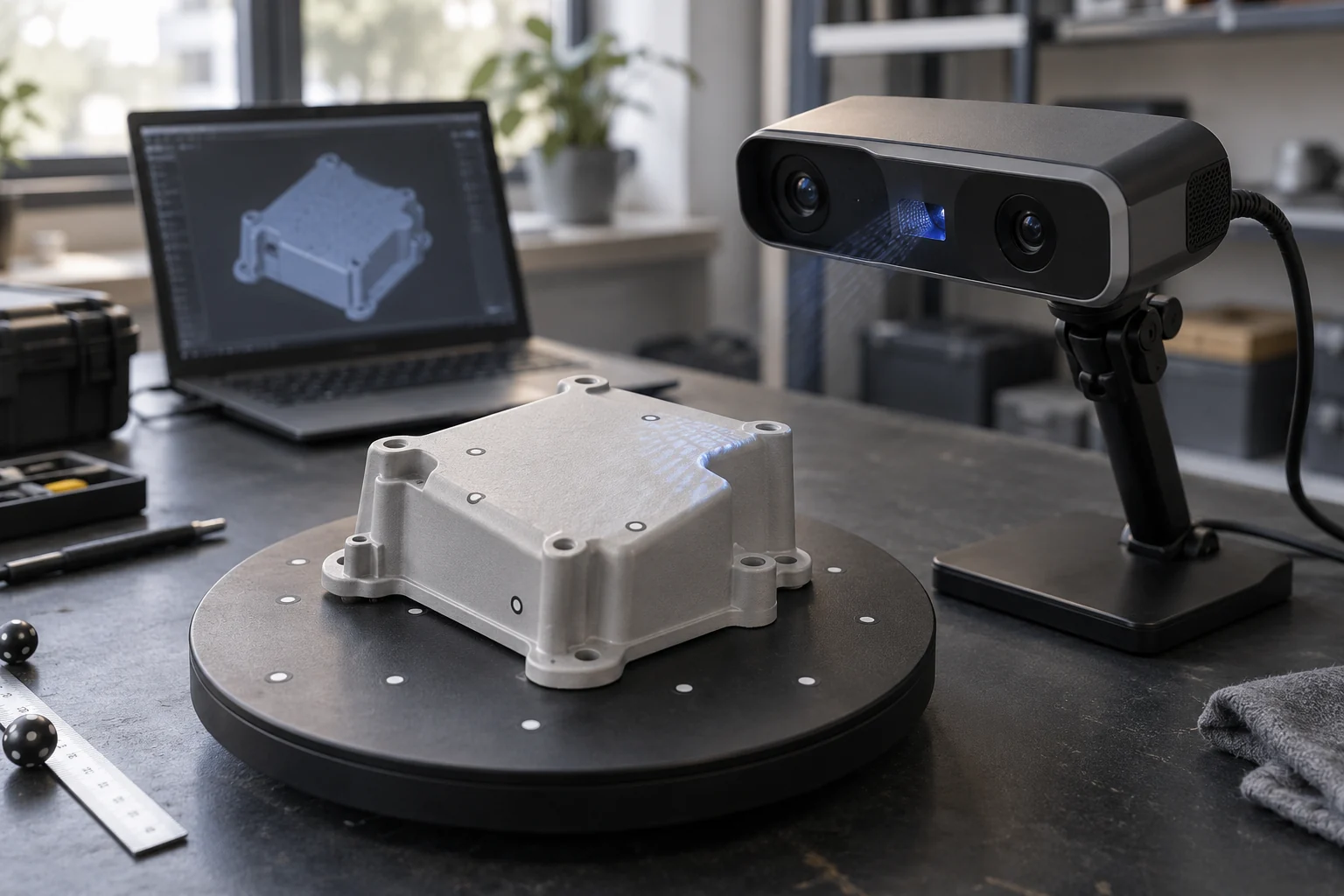
3D Scanning & Geometry Capture
Capture existing geometry for reverse-engineering reference, part recreation, modification, custom-fit work, or digital archiving.
Owners and design teams with a physical object whose visible shape needs to become a digital surface reference, mesh, or reverse-engineering input.
Request a QuoteDo you need a scan mesh or editable CAD?
A scan records visible surface geometry; it does not automatically recover clean dimensions, hidden features, design intent, or an editable parametric model. The required output determines the capture and modeling scope.
Plan around what the scan must capture
Output purpose
Visualization and archiving may use a cleaned mesh, while modification, dimension changes, or manufacturing usually benefits from additional reverse-engineering work.
Surface and access
Reflective, transparent, very dark, flexible, moving, recessed, or obstructed surfaces can require a different capture strategy or may leave incomplete areas.
Critical geometry
Holes, mating faces, thin edges, hidden features, and precise interfaces may need direct measurement even when surrounding freeform surfaces are scanned.
A capture path built around the purpose
The useful workflow depends on how the resulting geometry will be used.
Geometry capture
Collect surface information from an existing object for a defined project purpose.
Reverse-engineering reference
Use scan data alongside measurements to support editable CAD recreation.
Modification workflow
Capture an existing form as a starting point for a new or adjusted design.
Digital reference
Preserve useful geometry for future visualization or documentation.
Object and input brief
Bring the physical context and define the next useful output before capture is confirmed.
- Photos and approximate object dimensions
- The physical item after arrangements are confirmed
- Intended use and areas that matter most
- Required mesh or editable CAD output
- Mating parts and known fit dimensions
- Surface condition and handling restrictions
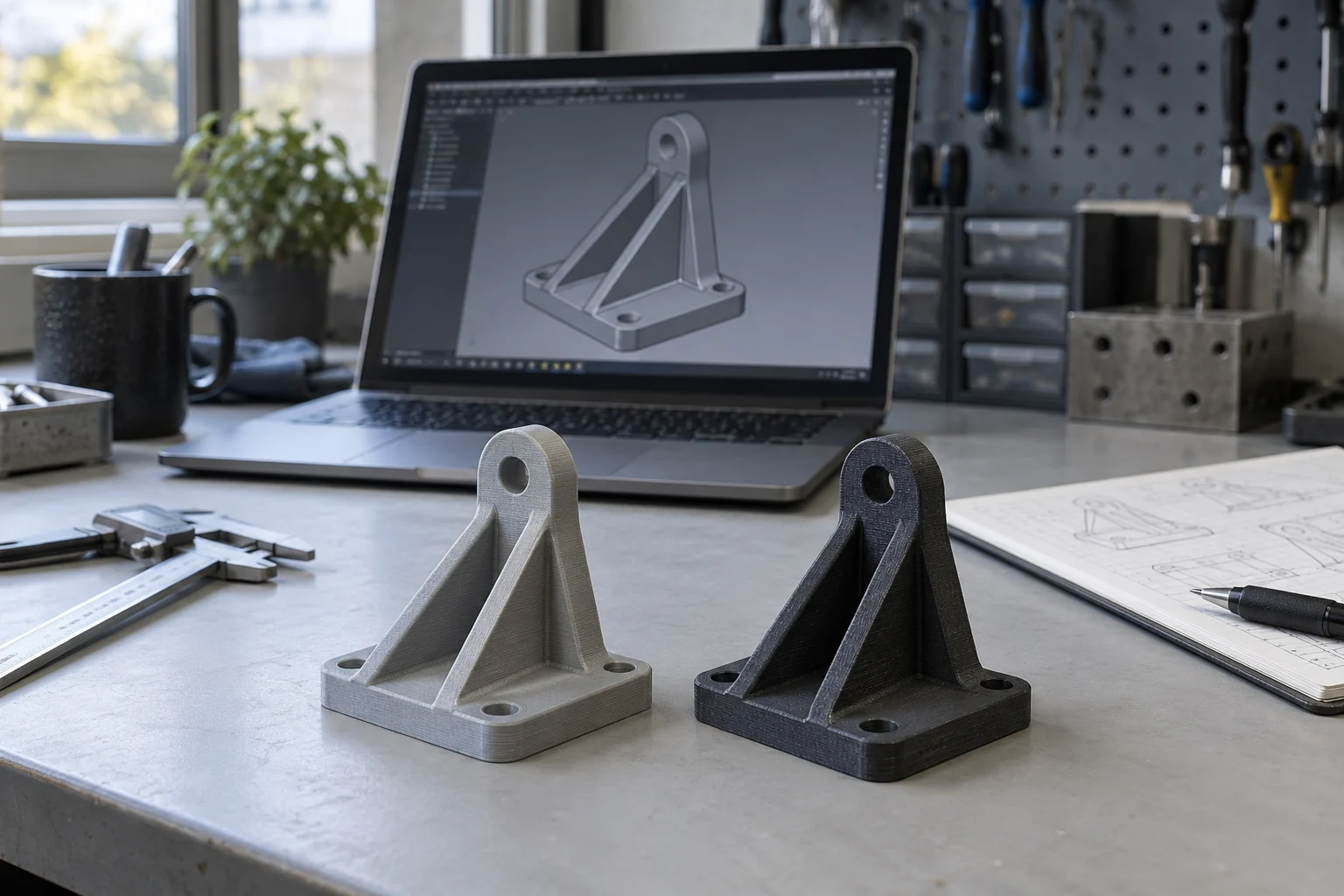
3D Scanning questions
Does a 3D scan automatically give me editable CAD?
No. A scan generally produces surface data or a mesh. Converting it into dimensioned, editable CAD requires interpretation, measurement, and separate reverse-modeling work.
Can every object be scanned the same way?
No. Surface color and reflectivity, transparency, texture, size, access, movement, and the detail required all affect the capture plan and what can be recovered.
When are manual measurements still needed?
Direct measurements are useful for critical diameters, hole spacing, mating faces, thicknesses, hidden features, and other functional dimensions that a surface scan may not establish reliably.
What should I send before bringing an object in?
Send several photos, approximate dimensions, the material or surface condition if known, and what you need the scan to do. Identify fragile areas and any restrictions on handling or surface preparation. We review access and the required output before arranging a handoff or confirming scanning work.
What is included in a scanning quote?
The quote should identify the object areas to capture, the agreed processing and file output, and whether measurements, CAD reconstruction, or a printed part are included. Size, accessible detail, surface condition, and the amount of modeling affect price and timing. A scan alone does not guarantee fit or a specified measurement accuracy.
Have an object to capture?
Share the object, its purpose, and the output you need so the capture approach can be reviewed.